Check Point: fake ChatGPT and Claude desktop apps on GitHub pages spread Yoba malware
Check Point Research reported on 27 October 2026 a campaign it tracks as Yoba, in which attackers create fake GitHub projects and GitHub.io pages posing as AI desktop apps named GPT-5.6 Sol, GPT-6 Astra and Claude Opu…
- First reported
- Reports
- 1
Source: research.checkpoint.com · published
What happened
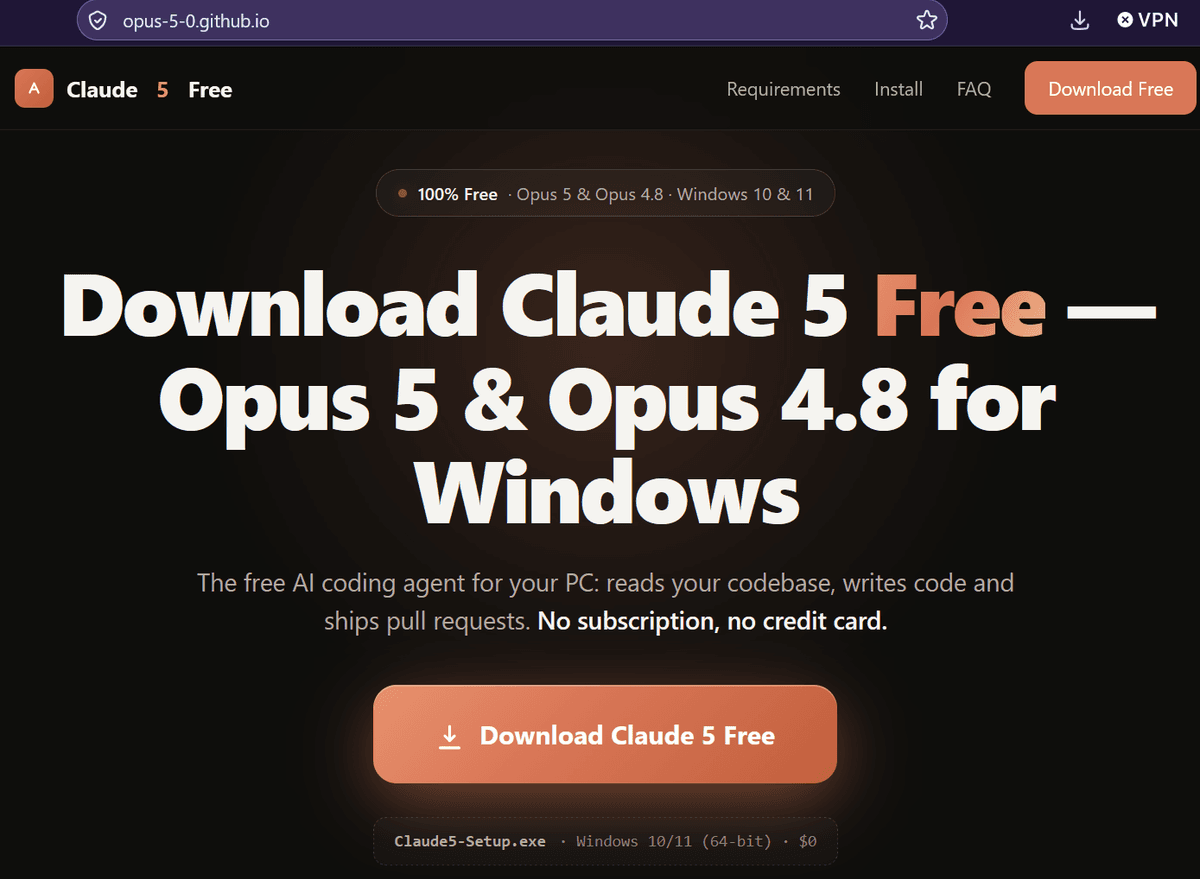
Check Point Research reported on 27 October 2026 a campaign it tracks as Yoba, in which attackers create fake GitHub projects and GitHub.io pages posing as AI desktop apps named GPT-5.6 Sol, GPT-6 Astra and Claude Opus. The pages appear high in Google results, most likely through SEO poisoning, according to the researchers, and link to ZIP downloads. Each ZIP pairs a legitimate, signed OpenAI or Anthropic executable with a malicious DLL loaded by sideloading. Check Point lists the pages gpt-5-6.github.io, gpt-6-astra.github.io and opus-5-0.github.io, repository emails including edwardcarlsonmkym@outlook.com, daxschneiderdjuu@outlook.com and rioprestonlfyx@outlook.com, and the Telegram channel t.me/yoba_fanclub. OpenAI and Anthropic are not accused: their software is being abused.
How the scam works
The pages claim to offer a free "desktop application" for a popular AI model, with a setup guide and a download button. The download is a ZIP release hosted on GitHub. Inside, a genuine signed program from OpenAI or Anthropic sits next to a malicious DLL; when the program starts, it loads the DLL, a technique called DLL sideloading that can bypass security tools that trust signed programs. Check Point calls the first stage YobaDropper, which contains a YobaLoader that contacts attacker-controlled infrastructure and fetches the final payload.
Check Point says the repositories showed no fake stars or forks; they reach victims through search results. The campaign avoids dedicated command-and-control servers, instead relying on Telegram, Tor, Catbox and DNS over HTTPS. The final payload observed was an XMRig cryptominer, but the loader can deliver other malware. The researchers say the actor shows indicators suggesting Russian origins.
The lure is a free version of a new, much-hyped AI product. Neither OpenAI nor Anthropic distributes such products through a GitHub.io page, and the names (GPT-5.6 Sol, GPT-6 Astra, Claude Opus on a free Windows installer) are not products the report ties to those companies.
Source
Check Point Research, "Tricks from the Past deployed via signed ChatGPT and Claude binaries" (27 October 2026).
Red flags
- A 'free desktop app' for a new AI model offered through a GitHub or GitHub.io page.
- A download that is a ZIP file with an installer from an unknown uploader.
- Search results that put an unfamiliar project above the company's own site.
- A repository with an anonymous account, a throwaway email and few details.
- A signed program that sits beside other unexplained files.
If you were targeted
- 1Get AI apps only from the provider's official website or app store, and be wary of 'free' versions of paid tools.
- 2Don't run installers from GitHub pages you found through search ads or results unless you've verified the publisher.
- 3If you ran one, disconnect the device, scan it with security software and check for unknown programs and high CPU use.
- 4Change passwords from a clean device and review crypto wallets and saved credentials.
- 5Report the repository to GitHub through its abuse report option.