MalwareTips: shopsimplyseattle.shop copycat store with invented 'since 1988' backstory
MalwareTips rates shopsimplyseattle.shop High Risk (38/100); the five-month-old site uses the Simply Seattle name and a 'since 1988' history, and MalwareTips calls it a scam store.
- First reported
- Reports
- 1
Source: malwaretips.com · published
What happened
A MalwareTips investigation published 16 October 2026 says shopsimplyseattle.shop is a fraudulent online store that should be avoided. MalwareTips found that the domain was registered on May 27, 2026, 141 days before its check, and that its SSL certificate was issued on September 24, 2026. The MalwareTips URL scanner gives the site a Safety Score of 38/100, rated High Risk.
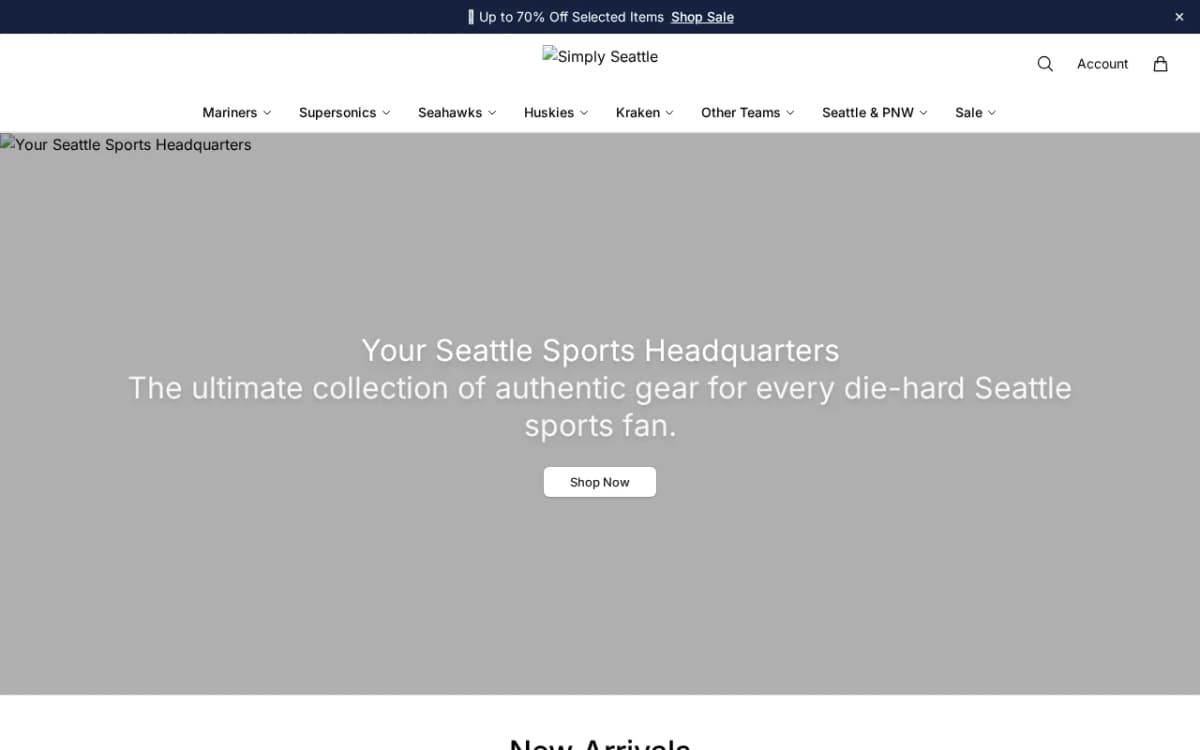
The site presents itself as Seattle sports retailer "Simply Seattle" and claims 38 years of history: "About Simply Seattle Since 1988, we have been the premier destination for Seattle sports". MalwareTips says the recently registered domain exposes this as an invented backstory. Simply Seattle is also the name of an established Seattle sports-merchandise retailer whose official site is simplyseattle.com; shopsimplyseattle.shop is a separate site using that name, and the genuine retailer is not involved.
MalwareTips says the store advertises "up to 90% off" discounts with product images taken from legitimate retailers, that its policy pages look copied or generic, that customer service is limited to a generic email address and contact form, and that ownership is hidden. It links the site to a wider network of copycat stores commonly associated with China-based operations.
How the scam works
MalwareTips describes the same playbook for stores in this network. Paid ads on Facebook, Instagram and TikTok use retail hooks such as "Warehouse Sale", "Limited Time" and "Going Out of Business" to rush shoppers to checkout. The ad opens a site that looks like an ordinary shop, with a tidy layout, professional product photos, reviews, delivery promises and policy pages, plus countdown clocks and "low stock" or "only a few left" notices.
After payment, buyers usually get a confirmation email and perhaps a generic "processing" message, and then nothing useful. Either no package arrives, or a cheap item unlike the listing is sent; MalwareTips says sending a token product is deliberate, because it confuses buyers and makes payment disputes harder. "Support" stops replying or sends scripted excuses such as "please wait longer", and refunds are delayed, reduced or made conditional on posting the goods abroad, often to China, at the buyer's cost.
When complaints build up, the operators register another domain, rename the shop and reuse the same templates, ad themes and product photos for a new round of victims.
Source
MalwareTips, "Shopsimplyseattle.shop EXPOSED - Fake or Real? Store Investigation" (16 October 2026).
Red flags
- Discounts of "up to 90% off" across a whole catalogue, pushed through Facebook, Instagram or TikTok ads.
- A recently registered domain with no track record, or a store name that copies a real brand.
- Generic or copied Terms, Privacy and About Us pages, and no verifiable phone number, address or named owner.
- Countdown timers and "only a few left" messages.
- Product photos and text that also appear on established retailers' sites.
If you were targeted
- 1Don't order from the site or enter card or personal details there.
- 2If you paid by card, call your bank to dispute the charge (chargeback) and ask for a replacement card; if you used PayPal, open a dispute with your order confirmations and screenshots.
- 3Change any password you reused at checkout and turn on two-factor authentication.
- 4Watch your statements for unfamiliar or small test charges.
- 5Report the site: in the U.S. at ReportFraud.ftc.gov, elsewhere to your national consumer or cybercrime agency.