Stack-deckcoin.com promises a '150 XRP' XRP Ledger reward that leads to a wallet-draining lure, MalwareTips warns
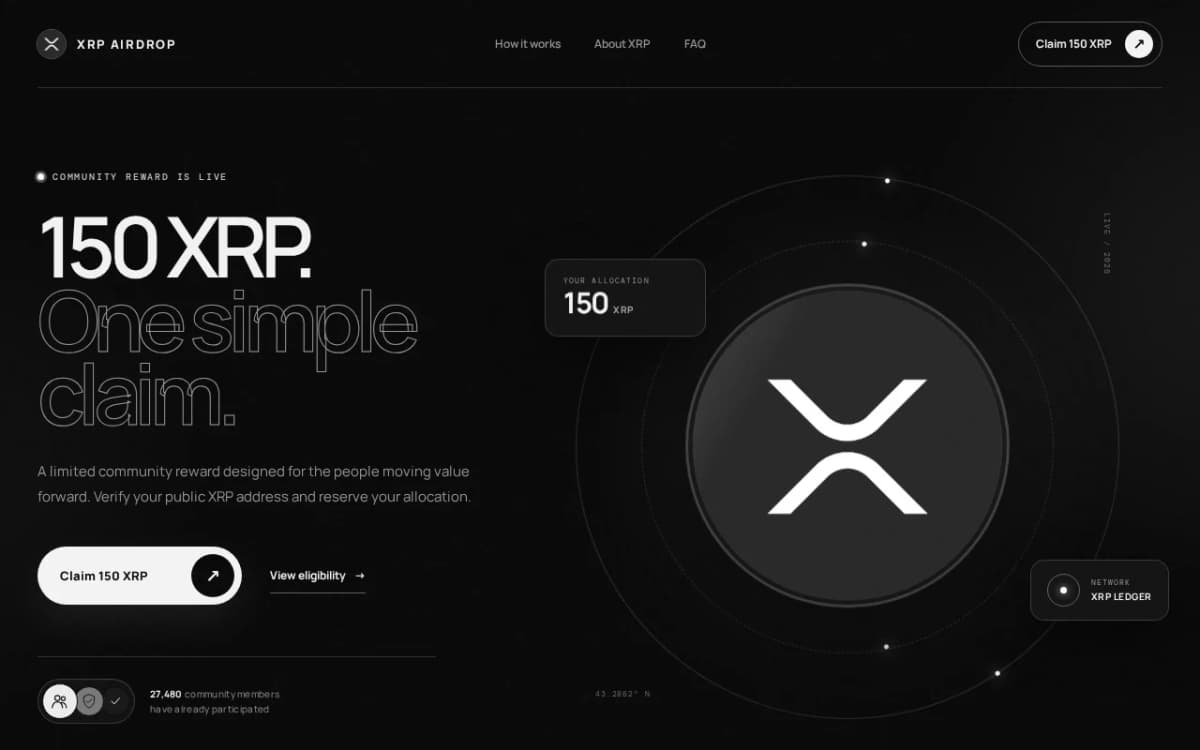
In a post published October 20, 2026, MalwareTips warns that stack-deckcoin[.]com runs a fake XRP Ledger airdrop. The page tells visitors that 150 XRP has been reserved for them as a 'community reward', with XRP image…
- First reported
- Reports
- 1
Source: malwaretips.com · published
What happened
In a post published October 20, 2026, MalwareTips warns that stack-deckcoin[.]com runs a fake XRP Ledger airdrop. The page tells visitors that 150 XRP has been reserved for them as a 'community reward', with XRP imagery, a claim button, a 'live reward' notice and a participation counter that MalwareTips says is only a claim made by the page, not a verified count of recipients. According to MalwareTips, the reported journey leads to a wallet selector and a cryptocurrency-draining lure. MalwareTips notes that the real XRP Ledger is an open-source blockchain and that a separate site using its name is not an official reward administrator; the XRP Ledger project is not involved with this site. MalwareTips says no wallet was used to test a transaction and no specific malicious contract or completed theft was independently established. It advises not to connect a wallet or approve requests through the page, never to enter a recovery phrase into an airdrop site, and not to send a 'test' payment to unlock a larger reward.
How the scam works
MalwareTips says the pitch frames the 150 XRP as a reward for taking part in the ecosystem, so it reads as recognition rather than an unfamiliar financial transaction. Community distributions do exist in crypto, which makes the idea feel plausible, and recognisable XRP imagery draws attention away from the unrelated domain. The personal 'allocation' appears without any independently verified eligibility check, and the page's own FAQ is written by the same untrusted operator. MalwareTips warns not to send a 'test' payment to see whether a larger reward exists: a successful transfer out of a wallet only proves you paid.
The reported next step offers a long menu of wallet brands, which makes the site resemble an ordinary decentralised app, but displaying a wallet's name is not an endorsement. MalwareTips notes that a multichain wallet may hold assets unrelated to XRP; if a page promising an XRP reward asks for an action on another network, that mismatch is a reason to stop. The page may call the request 'verification' or 'claiming', but the wallet prompt itself defines what is authorised: a transaction can move assets or change account settings, and a permission or signature can have other effects. A genuine wallet never needs a recovery phrase typed into a website to receive an airdrop.
Source
MalwareTips, "XRP Ledger Airdrop Scam: The Fake 150 XRP Reward On Stack-Deckcoin.com" (published 20 October 2026).
Red flags
- A website saying an XRP reward has been 'reserved' for you.
- A domain that isn't the XRP Ledger's official site.
- Participation counters or 'live reward' notices you can't verify.
- A long wallet-connection menu on a giveaway page.
- Any request for a test payment, fee or recovery phrase to unlock a reward.
If you were targeted
- 1Don't connect your wallet, sign, or approve anything on the page.
- 2Never type a recovery (seed) phrase or private key into a website or give it to 'support'.
- 3Check announcements only through the project's official website or accounts that you open yourself.
- 4If you connected and approved something, revoke the token approval with your wallet's or the network's approval tool and move remaining assets to a new wallet if you're unsure what you signed.
- 5If you disclosed a recovery phrase, treat the wallet as compromised and move assets to a new wallet created with a new phrase.
- 6Report the site to your wallet provider and, in the U.S., to the FBI's IC3 at ic3.gov.