Skip to content
Scammers.com
Crypto, investment & PonziReviewed

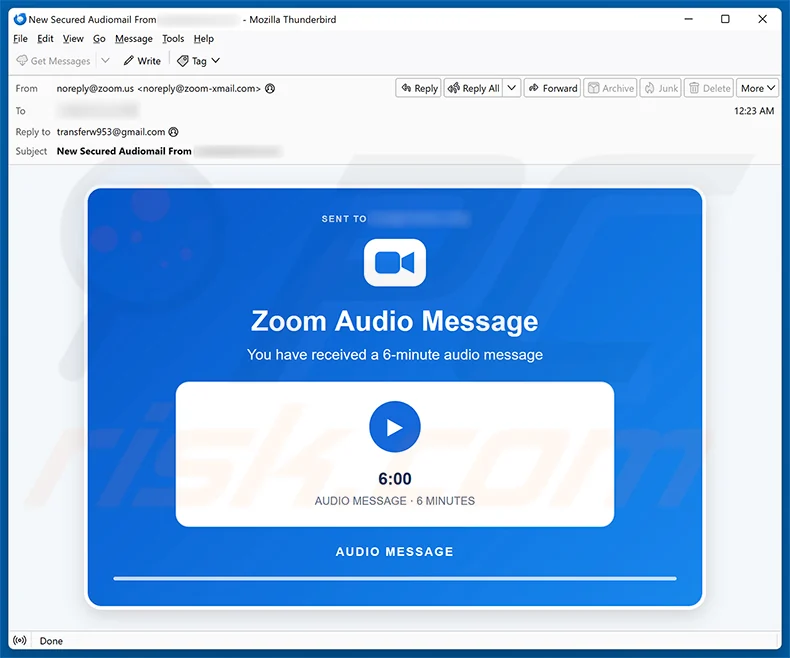
FBI 'FaceStealer' warning: fake Zoom meeting links such as uu01webzoom.us used to infect crypto workers

Help Net Security reported today on the FBI's warning about 'FaceStealer', a scheme the FBI attributes to North Korean state hackers (tracked as Sapphire Sleet, BlueNoroff and APT38, among other names) that has stolen…

First reported
Reports
1

Source: helpnetsecurity.com · published

Illustration: Investing and crypto scams

What happened

Help Net Security reported today on the FBI's warning about 'FaceStealer', a scheme the FBI attributes to North Korean state hackers (tracked as Sapphire Sleet, BlueNoroff and APT38, among other names) that has stolen more than $400 million in cryptocurrency over the past 18 months. The attackers take over earlier victims' Telegram, LinkedIn, Slack and Discord accounts, message their contacts about catching up or an investment, set a time with a Calendly invite, and shortly before the call send a meeting link pointing to a lookalike domain such as uu01webzoom[.]us. In the fake call they play recorded webcam video of the contact and other 'participants', then claim the target cannot be heard and walk them through an update, script or terminal command that installs a cookie harvester, keyloggers, a screen capturer and a backdoor while the webcam records them for use against the next victim. The FBI has seized more than 900 such recordings. The FBI advises keeping the webcam off until you can see, hear and talk with the inviter, joining through the official Zoom or Teams app with an invite code, confirming invitations through a second channel, never running scripts or pasting code to fix a meeting app, keeping only small amounts in browser extension wallets, and moving funds to a new wallet created on a clean device if compromise is suspected.

How the scam works

Crypto phishing and draining sites ask you to connect a wallet, sign a transaction, 'claim' a token, or paste a recovery phrase. Once you approve the request, the operator can empty the wallet. Address-poisoning works differently: the operator sends dust or zero-value transfers from a look-alike address so that, later, a hurried copy-paste from the transaction history goes to them instead of to the address you meant. Always check every character of an address, and never connect a wallet or enter a seed phrase on a site you reached from a message, a pop-up or a look-alike URL. Official wallet and exchange brands named in a lure are not involved.

Source

Source: https://www.helpnetsecurity.com/2026/11/13/fbi-north-korean-fake-zoom-calls/
Red flags

  • A site or bot that asks you to connect a wallet, sign a transaction, claim a token or paste a recovery phrase.
  • A deposit or payment address that only matches the start and end of the address you used before.
  • A 'support' or 'founder' account that writes first on Telegram, X or email and pushes a live link or a contract address.
  • A promise of a guaranteed return, a free mint or a sudden airdrop from a look-alike brand.

If you were targeted

  1. 1Never paste a seed phrase or approve a wallet connection on a site you reached from a message or a look-alike URL.
  2. 2Check every character of an address, not just the first and last digits, and confirm it in a saved official entry.
  3. 3If funds have left the wallet, stop further approvals, move what remains to a new wallet you control, and document the transaction hashes.
  4. 4Report the site, contract or account to the real project's official channels and to a blockchain-abuse desk if one exists.
Screenshot of a SharePoint-themed phishing lure page showing a verification code and a "Continue to SharePoint" button
PhishingReviewed

LevelBlue: 'BlackApex' device-code phishing kits steal Microsoft 365 tokens via fake SharePoint and Zoom lures

LevelBlue SpiderLabs described on 30 October 2026 “BlackApex”-family phishing kits that use fake SharePoint and Zoom pages to get victims to approve a Microsoft device code and give attackers Microsoft 365 tokens. Microsoft and Zoom are not involved.

  • miscrosoftonlinesecuredemandocument.com
  • Also securemsexcel.online, 1mdrvpdf-rfqonlineinvite.com; kit panels BlackApex, DarkApex, SPY, XXX101
  • Microsoft 365 device-code phishing kits
Reported Oct 30, 20261 report
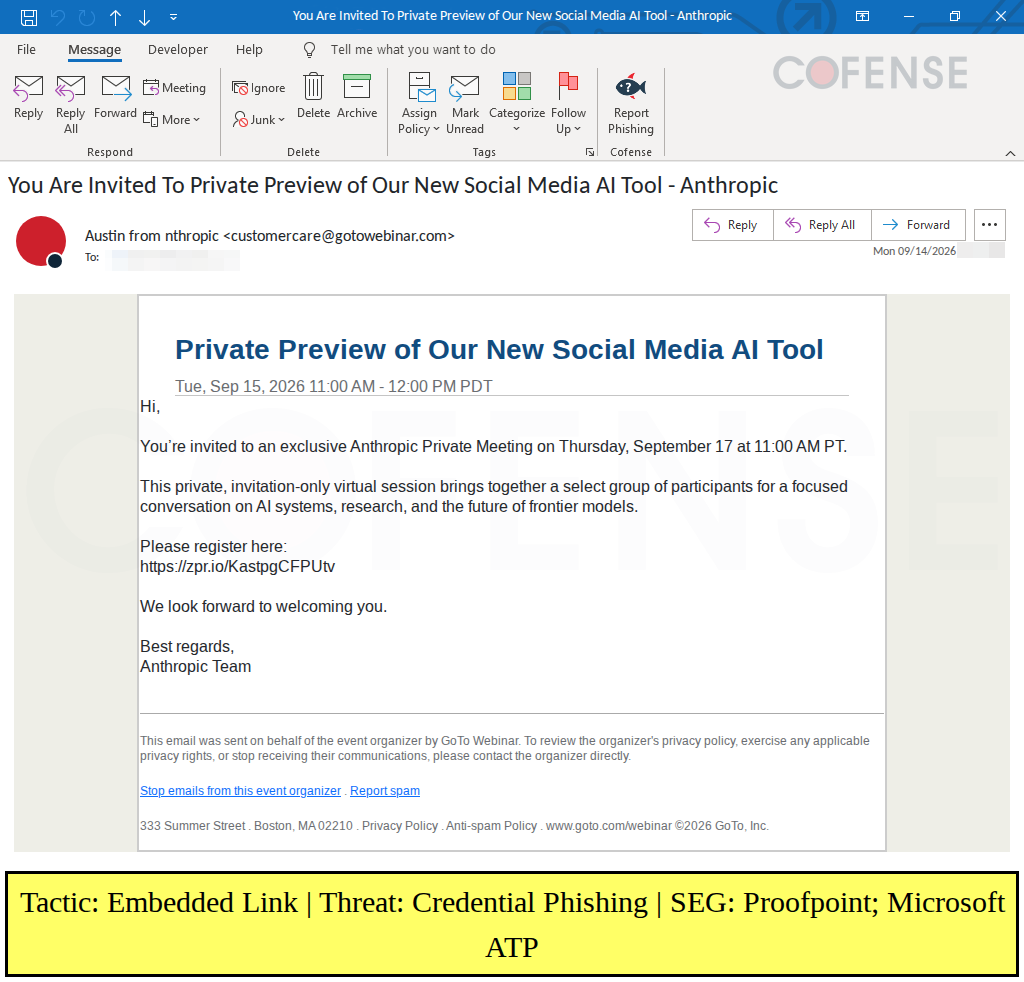
Screenshot of the phishing email inviting recipients to a private Anthropic AI preview
PhishingReviewed

Fake 'Anthropic AI preview' invites lead to Google/Microsoft phish on us968web-zoom.us

Cofense reports fake "Anthropic AI preview" invitations, abusing GoTo Webinar and a Zapier link shortener, that lead to Google and Microsoft credential-phishing pages on lookalike domains.

  • us968web-zoom.us
  • Phishing hosts: goo.gle-access-eventregister.icu, office.com-access-sharepoint.com; sender name 'Austin from nthropic'
  • Fake Zoom or meeting-invite credential / malware lures
Reported Oct 29, 20261 report
PhishingReviewed

Fake Meta 'Page Appeal' site on chronos-reprieve-658a.s2506015.workers.dev steals Facebook logins and 2FA codes

Website scanning service ScanMalware posted on X on 12 November 2026 that chronos-reprieve-658a.s2506015[.]workers[.]dev is a confirmed scam. Its scan report describes a phishing kit imitating Meta's Privacy Center an…

  • chronos-reprieve-658a.s2506015.workers.dev
  • Path /analysis_center/; Cloudflare workers.dev subdomain; exfiltration via Telegram bot
  • Phishing kit exfiltrating to a Telegram bot (12 Nov 2026)
Reported Nov 12, 20261 report